

BY VICTORIA AMUNGA |5484 MEDIA | KENYA
STORY HIGHLIGHTS
- Kenya secures investment pledges worth more than US$2.9bn at KIICO 2026, targeting key growth sectors
- Rising taxes, high operating costs and bureaucracy are shaping investor caution
- Regional rivals Tanzania and Uganda are repositioning themselves to compete for global capital
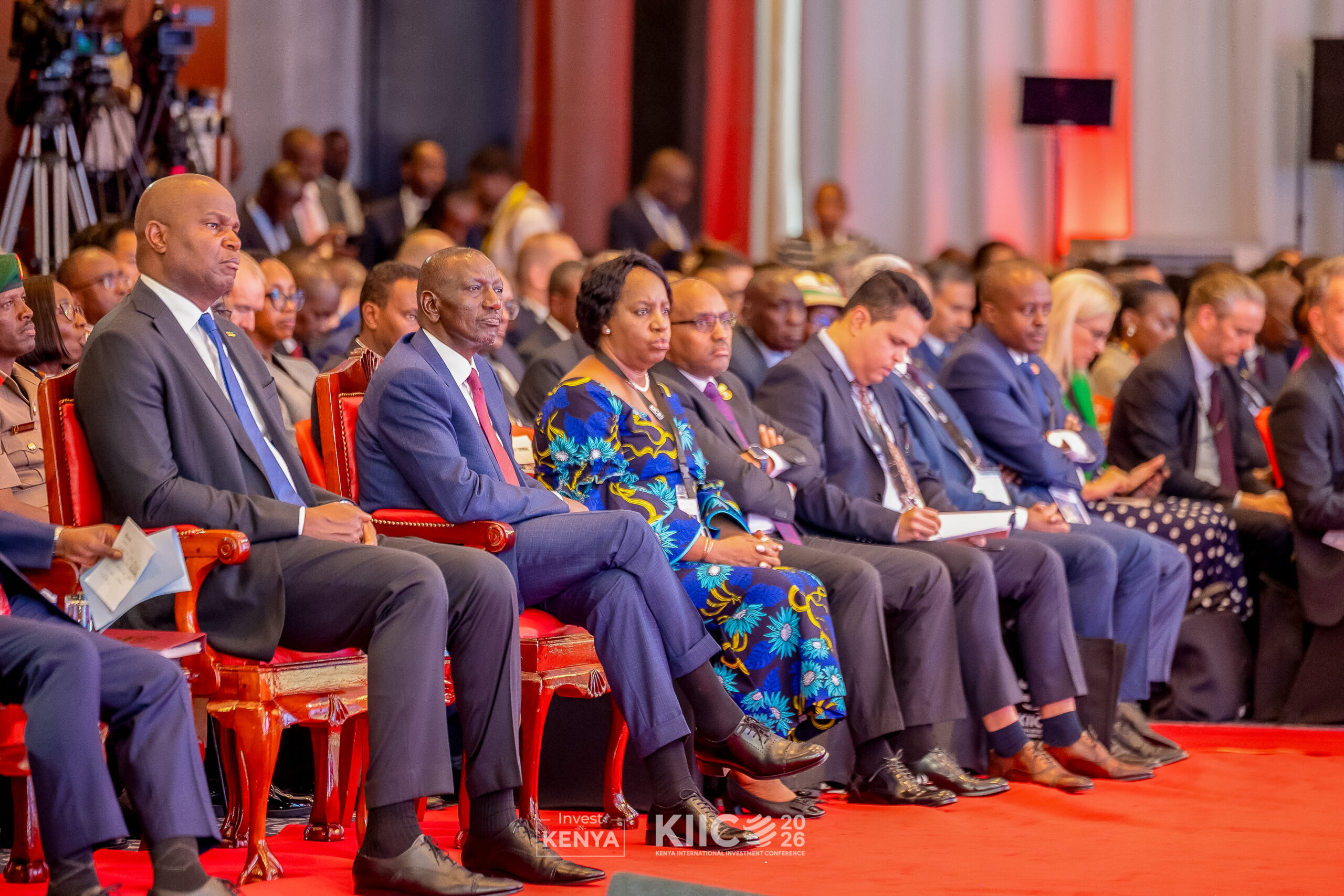
Kenya’s government says the country remains a leading destination for foreign investment, announcing deals worth more than US$2.9bn (£2.3bn) at the Kenya International Investment Conference (KIICO) 2026.
Speaking at the event, President William Ruto said the investments span strategic sectors including agriculture, mining, manufacturing, healthcare, information and communications technology (ICT), real estate and energy.
“We have implemented bold, investor-friendly reforms to enhance competitiveness and improve the ease of doing business,” Mr Ruto told delegates, signalling Nairobi’s determination to maintain its position as East Africa’s commercial hub.
The conference brought together global investors, development financiers and multinational firms at a time when competition for capital across the region is intensifying.
Kenya’s long-standing regional advantage
For decades, Kenya has been regarded as East Africa’s economic powerhouse. Its appeal has rested on a diverse economy that avoids reliance on a single commodity, instead drawing strength from finance, agriculture, logistics, services and a globally recognised technology sector.

Nairobi’s fintech ecosystem—often dubbed “Silicon Savannah”—has produced innovations widely adopted across Africa. Combined with relatively strong institutions, skilled labour, and regional headquarters for multinational firms, Kenya has long been the default gateway into East Africa.
This maturity still counts in its favour. Investors value predictability, market depth and access to a broad consumer base—areas where Kenya continues to outperform many of its neighbours.
Rising costs and investor concern
Yet beneath this confidence, there are signs of strain.
Investors and analysts increasingly point to higher taxes and frequent policy changes as a growing concern. Businesses warn that the rising tax burden has increased operating costs and raised questions about long-term policy stability—factors that weigh heavily on investment decisions.
Kenya is now widely viewed as one of the most expensive markets in East Africa, challenging its competitiveness against lower-cost neighbours.
Administrative hurdles also persist. Despite improvements in digital services, investors say that securing permits, navigating compliance requirements and dealing with multiple regulatory agencies can remain time-consuming. Comparisons are often drawn with Rwanda, where streamlined systems and faster approvals are frequently cited as a competitive advantage.
Infrastructure gaps add to the pressure. Energy reliability and urban congestion—especially in Nairobi—remain operational challenges for businesses.
Tanzania’s industrial resurgence
Nowhere is the regional shift more visible than in Tanzania.
Once perceived as a slower-moving economy, Tanzania has rapidly repositioned itself as an emerging industrial and logistics hub. Large-scale investments in ports, railways and energy infrastructure are transforming the country into a critical gateway not only for East Africa, but also for parts of Central and Southern Africa.

For investors focused on manufacturing, mining and large infrastructure projects, Tanzania offers what Kenya often struggles to match: scale at a lower cost. Large tracts of land, cheaper energy and expanding transport corridors are reshaping investor calculations.
This transformation has made Tanzania an increasingly formidable competitor for capital that once flowed almost automatically to Nairobi.
Uganda’s resource-driven bet
Meanwhile, Uganda is charting a different path.
With major oil and gas projects advancing, the country is preparing to become a significant petroleum exporter. The development of upstream oil fields, pipelines and supporting infrastructure has drawn global attention, unlocking new investment flows into energy, transport and agriculture.
For resource-focused investors, Uganda’s natural endowment presents long-term opportunity, while its broader infrastructure build-out is gradually improving the overall investment climate.
A more complex choice for investors
For investors evaluating East Africa today, the decision is no longer straightforward.
Choosing Kenya still offers access to a mature business ecosystem, skilled professionals and strong regional connectivity. However, it also means navigating higher costs, regulatory complexity and policy uncertainty.
By contrast, countries such as Tanzania and Uganda—once seen mainly as secondary markets—are now increasingly viewed as viable alternatives, each offering distinct advantages.
Balancing ambition with reform
Kenya’s US$2.9bn investment announcements underscore the government’s ambition to remain a continental heavyweight. But sustaining that position will likely depend less on headline figures and more on addressing long-standing concerns around cost, clarity and competitiveness.
As East Africa’s economies evolve, Kenya’s challenge is clear: to ensure its reputation as the region’s gateway does not become its greatest test.