
BY STAFF REPORTER | 5484 MEDIA | KENYA
STORY HIGHLIGHTS
- Kenya has set a target of producing 150,000 metric tonnes of coffee annually by 2028.
- Government reforms focus on seedling distribution, cooperative governance, digitisation and market access.
- Industry leaders say stronger links between farmers and buyers will be critical to achieving growth.
Kenya is seeking to increase its annual coffee production to 150,000 metric tonnes by 2028 as part of an ambitious effort to revive one of the country’s most valuable agricultural sectors and boost earnings for hundreds of thousands of farmers.
The target was outlined by Principal Secretary for the State Department for Cooperatives Patrick Kilemi during a breakfast meeting held in Nairobi ahead of the East Africa Coffee Markets & Conference (EACMC) 2026. The government says the strategy will rely on expanded coffee cultivation, stronger cooperative societies, improved governance and greater access to local and international markets.
If achieved, the target would represent a significant increase from current production levels and place Kenya among Africa’s leading coffee producers. Kenya’s historical peak coffee production exceeded 120,000 metric tonnes in the late 1980s, according to industry records.
Reviving a Key Economic Sector
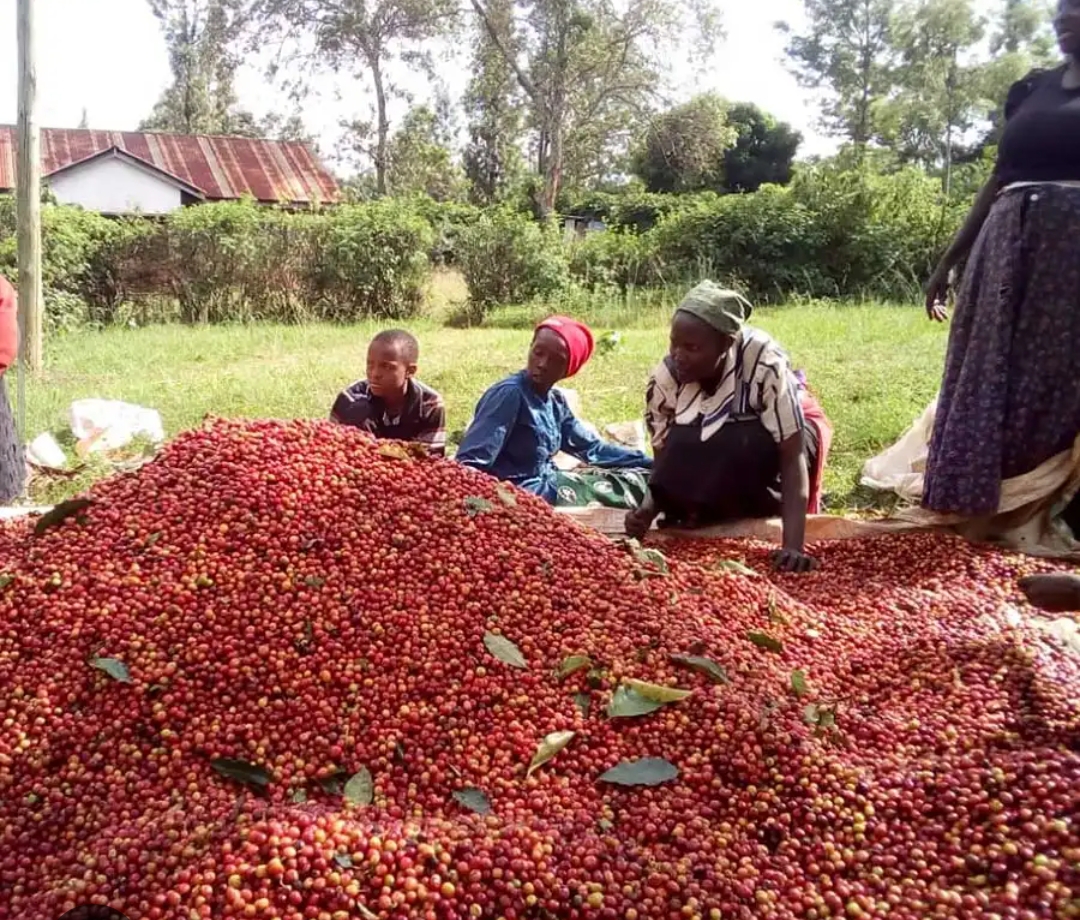
Coffee remains one of Kenya’s most important export crops and a major source of income for hundreds of thousands of smallholder farmers.
Speaking at the event, Kilemi said the government intends to strengthen Kenya’s position in the global coffee market.
“On the global coffee map, we do not want to be a dot; we want to be a number that will be referenced,” he said.
The government has identified increased production as a key pillar of its coffee sector reforms and is expanding support programmes aimed at helping farmers establish new coffee plantations.

“We want to make sure that every farmer who digs a coffee hole gets a seedling at the right time,” Kilemi said.
According to the government, coffee farming has expanded beyond its traditional growing regions, with coffee now being cultivated in 35 of Kenya’s 47 counties.
Cooperatives at the Centre of Reforms
Officials say cooperative societies remain the backbone of Kenya’s coffee industry, with most smallholder farmers marketing their coffee through cooperative structures.
To improve efficiency and transparency, the government is implementing reforms aimed at strengthening governance within cooperatives while increasing farmer participation in decision-making.
Among the planned interventions is the digitisation of cooperative operations, which authorities say will improve traceability, reduce transaction costs and provide farmers with faster access to market information.
Kilemi said such measures are increasingly important as international buyers place greater emphasis on transparency and accountability within agricultural supply chains.
Focus on Quality and Market Access
Industry stakeholders attending the breakfast meeting stressed that increasing production alone will not be enough to strengthen Kenya’s competitiveness.
The government is encouraging farmers and cooperatives to invest in quality improvement, climate-resilient farming methods, certification programmes and better post-harvest handling practices.
Referring to the conference theme, “From Farm to Flavor: Quality, Compliance and Market Growth,” Kilemi said global consumers are demanding higher standards in sustainability, traceability and responsible production.
He also called for greater investment in value addition and branding, arguing that Kenyan farmers should capture a larger share of the value generated by the country’s internationally recognised coffee.
Regional Cooperation and Future Growth
The announcement came during the launch of the East Africa Coffee Markets & Conference 2026, which organisers say is being repositioned as a regional market-access platform connecting producers, cooperatives, exporters, buyers and investors.
According to Smart Farmer Africa Chief Executive and EACMC convenor Bernadette Murgor, one of the sector’s biggest challenges remains linking producers to markets.
“East Africa Coffee Markets & Conference 2026 is more than a conference; it is a strategic market access platform designed to connect producers, cooperatives, exporters, buyers and investors through meaningful business opportunities,” she said.
Murgor noted that many farmers and cooperatives continue to face barriers in accessing buyers, financing and market intelligence despite producing high-quality coffee.
“A farmer may produce excellent coffee but remain invisible to the market,” she said.
Challenges Ahead
While the government’s production target signals confidence in the sector’s future, industry experts say achieving it will depend on sustained investment, favourable weather conditions, access to quality inputs and successful implementation of reforms.
Officials also emphasised the need to attract more young people and women into coffee production, processing and marketing, arguing that the long-term sustainability of the industry depends on creating profitable opportunities for a new generation of farmers.
For Kenya, where coffee remains one of the country’s most recognised agricultural brands, the push to increase production is seen as part of a broader effort to strengthen export earnings and reinforce the country’s position in the highly competitive global coffee market.