BY VICTORIA AMUNGA | 5484 MEDIA | NAIROBI
STORY HIGHLIGHTS
- A Kenyan innovator is turning a childhood fascination with space into hands-on science education for young learners
- Children are learning astronomy and rocketry through interactive simulations and school outreach programmes
- The initiative aligns with Kenya’s growing ambitions in space science and technology
For many children, space is something glimpsed only in textbooks or on television screens. But in Kenya, one innovator is working to bring the cosmos closer to home.
Eugene Awimbo, a Kenyan science enthusiast, has transformed his lifelong fascination with space into a practical learning platform through Mbinguni Cosmic Park, an initiative designed to introduce young learners to the fundamentals of astronomy, rockets and space exploration.
The project aims to demystify science by making it tangible—turning abstract concepts into experiences that children can see, touch and explore.
Learning science by doing
At the heart of Mbinguni Cosmic Park is a belief that science is best understood through experience.
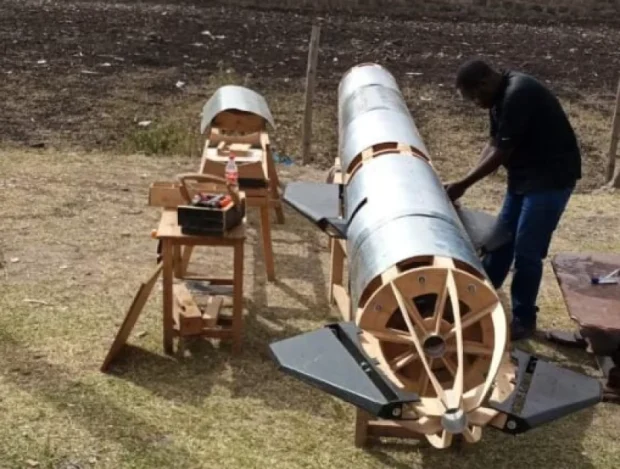
Children visiting the park take part in simulated space missions, interactive demonstrations and guided lessons using rocket models and spacecraft replicas.
These sessions introduce topics such as space travel, planetary science and basic astrophysics in a way that is accessible and age-appropriate.
By replacing rote learning with experimentation and storytelling, the programme helps students grasp complex scientific ideas while encouraging curiosity and critical thinking.
Educators involved in the initiative say this approach makes science less intimidating and more engaging, especially for learners encountering space science for the first time.
Taking space education beyond the park
While the park serves as a central learning hub, its reach extends far beyond its physical location.

So far, the programme has engaged students from 15 different schools, bringing space education directly into classrooms through outreach activities and demonstrations.
By working with teachers and schools, the initiative ensures that children who may never visit a science centre still gain exposure to space-related learning.
The goal, Awimbo says, is to make science inclusive—ensuring that interest in space is not limited by geography or resources.
Kenya’s growing space ambitions
The project comes at a time when interest in space science is increasing across Africa, with Kenya positioning itself as a regional player in the sector.
According to Brigadier Hillary Kipkosgey, Director General of the Kenya Space Agency, nurturing scientific curiosity at an early age is essential for building a future workforce capable of supporting the country’s space ambitions.
Kenya has already launched two satellites into orbit, and the creation of the Kenya Space Agency has helped coordinate national space activities.
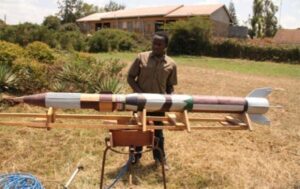
These include mentorship initiatives, school-based space clubs and partnerships aimed at strengthening science, technology, engineering and mathematics (STEM) education.
Inspiring the next generation
For Awimbo, the mission is about more than rockets and planets—it is about possibility.
He believes that initiatives like Mbinguni Cosmic Park can help children from all backgrounds imagine futures in science and technology, fields that often feel distant or unattainable.
As Kenya continues to expand its space science programmes, grassroots efforts such as this are playing a quiet but significant role: planting the seeds of ambition, curiosity and innovation in classrooms across the country.
For the young learners looking up at model rockets today, the journey to the stars may be just beginning.