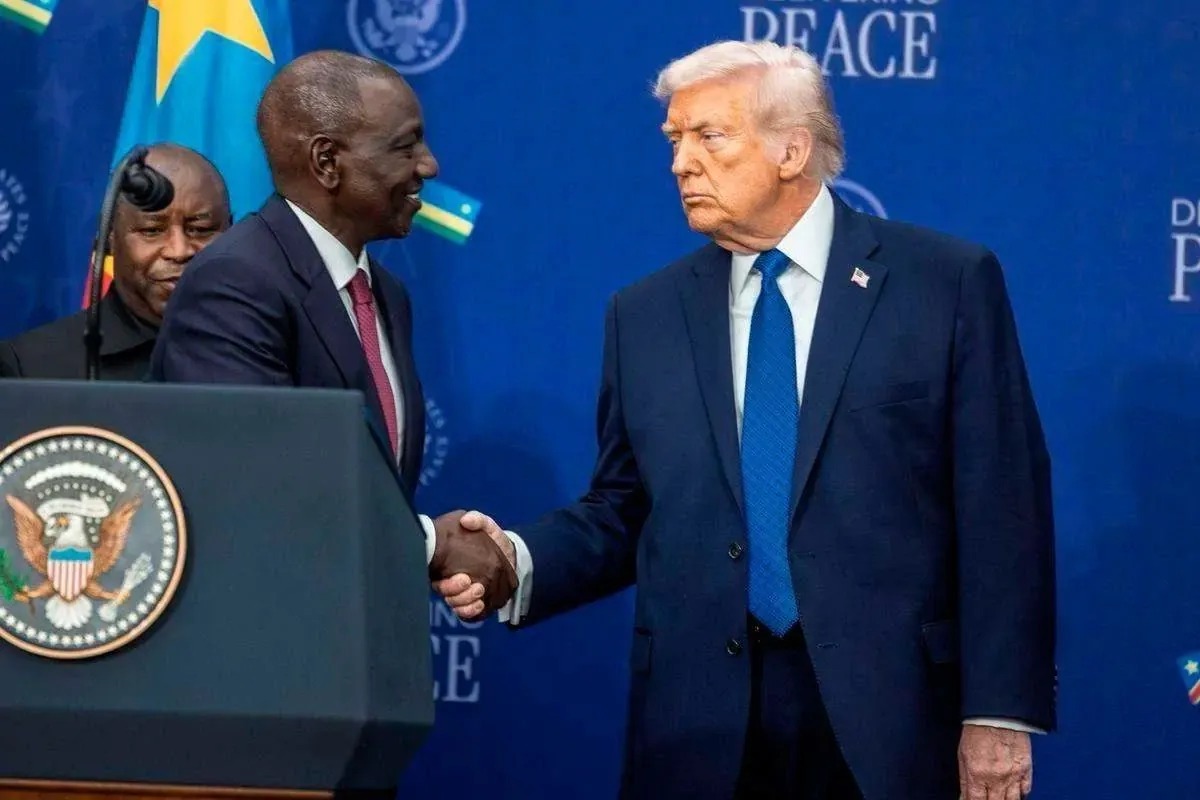
Nairobi, Kenya – Kenya has entered a defining moment in its health-sector reform agenda after signing a landmark $1.6 billion (KSh 208 billion) Health Cooperation Framework with the United States—an agreement that both governments describe as transformative, far reaching, and unprecedented in the history of bilateral health partnerships. Signed in Washington, D.C. and witnessed by President William Ruto, Prime Cabinet Secretary Musalia Mudavadi, US Secretary of State Marco Rubio, and top health officials, the five-year deal channels funding directly through Kenya’s core government institutions rather than third-party intermediaries. Officials say the structure aims to strengthen accountability, reduce inefficiencies, and boost national ownership of health programmes. The agreement prioritizes four areas critical to Kenya’s Universal Health Coverage (UHC) vision: • Modernisation of medical equipment across hospitals • Efficient supply of essential health commodities • Scaling up Kenya’s health workforce • Expanding health insurance coverage to protect every citizen Kenya becomes the first country globally to sign this new model of US health cooperation— placing the country under continental and international scrutiny as nations weigh the benefits and risks of similar frameworks. A Turning Point for UHC—But Also a Test Kenya’s health system has long battled shortages of medical commodities, recurring health worker strikes, gaps in public insurance schemes, and delayed service delivery. The new framework—built around direct government-to-government financing, mutual accountability, and long-term planning—is intended to stabilize critical programmes and reduce dependency on short donor cycles. Dr. Ouma Oluga, Principal Secretary for Medical Services and Kenya’s chief negotiator, described the agreement as a “game changer” and a radical shift from previous fragmented models. “We promoted the best interests of our people, ensuring critical service certainty and alignment with the government’s agenda. This cooperation framework is a complete departure from the past and will have a lasting impact on health for all,” Oluga said. The United States will invest heavily in Kenya’s institutional pillars—including the Social Health Authority (SHA), Digital Health Agency (DHA), and KEMSA—with Kenya also committing domestic resources to strengthen its financing architecture and workforce. President Ruto welcomed the deal, saying it aligns with the government’s agenda to expand essential services nationwide.

Recommended For You
 Regenerative farming gives Kenya’s coffee growers a new weapon against climate change
Regenerative farming gives Kenya’s coffee growers a new weapon against climate change

5484 MediaSeptember 9, 2026
 Chinese Watchmakers Eye Kenya as Gateway to East African Market
Chinese Watchmakers Eye Kenya as Gateway to East African Market
5484 MediaAugust 20, 2026
 Kenya Aims to More Than Double Coffee Output to 150,000 Tonnes by 2028
Kenya Aims to More Than Double Coffee Output to 150,000 Tonnes by 2028
5484 MediaJune 17, 2026