
Oplus_131072

BY BUSINESS REPORTER | 5484 MEDIA | KENYA
- Erratic rainfall, rising temperatures and soil degradation are threatening coffee production and farmers’ livelihoods.
- Regenerative agriculture is helping farmers improve soil health, conserve water and restore biodiversity.
- Experts say locally adapted farming practices could help protect coffee quality, yields and future supplies.
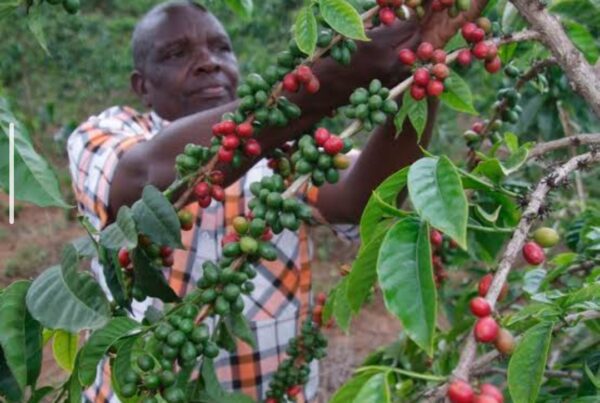
For coffee farmers, climate change is becoming an increasingly difficult reality.
Erratic rainfall, prolonged dry spells and rising temperatures are putting pressure on coffee bushes, while soil degradation, pests and diseases threaten production and the livelihoods of farming families.
The challenges are forcing farmers and agricultural experts to rethink how coffee is grown.
Across coffee-growing regions, increasing attention is being paid to regenerative agriculture – an approach that aims not only to produce crops but also to restore the health of the land.
Restoring the health of the soil
Regenerative agriculture focuses on improving soil health, conserving water, increasing biodiversity and restoring natural ecosystems.
On coffee farms, this can include planting shade trees, using crop residues and organic matter as mulch, applying compost, reducing soil disturbance and growing other plants alongside coffee.
The aim is to create healthier and more resilient farms that can better withstand changing weather conditions.
Martin Ngare, general manager of Coffee Management Services, says the approach could also help make coffee supplies more predictable for international buyers.
“For the customers that buy from us, they need to know if they order six boxes or six containers of coffee, they want to be assured that they can get the same volumes in the following year,” he said.
“So that market becomes a bit more sustainable, as opposed to producing two tonnes today and five tonnes tomorrow. That is not very sustainable.”
Better farming could mean better prices
Mr Ngare says regenerative practices can also improve the quality of coffee, potentially allowing farmers to access higher-value markets.
“Generally, the quality of the coffee increases. And therefore you get more premium grades because you are doing the right practices,” he said.
For farmers, better quality and more consistent production could provide an important buffer against some of the economic pressures facing the coffee sector.
But regenerative agriculture is not a one-size-fits-all solution.
Farmers need locally adapted solutions
Agricultural experts say the success of regenerative farming will depend on adapting practices to local conditions.
What works on one coffee farm may not necessarily produce the same results elsewhere because of differences in soil, rainfall, altitude, crops and farming systems.
For coffee farmers facing an increasingly uncertain climate, however, restoring the land could offer a way to make farms more resilient.
The approach could help keep coffee bushes productive while protecting soil and water resources – giving future generations a better chance of continuing to grow, harvest and enjoy coffee.