BY BUSINESS WRITER | 5484 MEDIA | KENYA
STORY HIGHLIGHTS
- Record attendance at Nairobi flower trade exhibition underscores global demand for Kenyan blooms.
- Industry leaders warn rising freight, regulatory and production costs are squeezing profits.
- Exporters are targeting new markets beyond Europe to sustain growth.
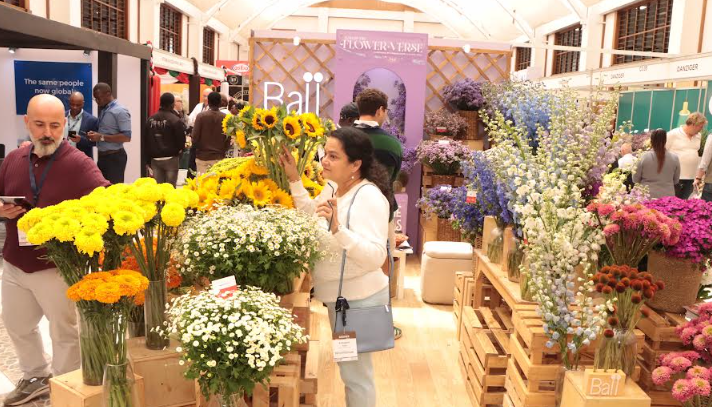
Kenya has reaffirmed its position as one of the world’s leading flower exporters as hundreds of international buyers, growers and industry leaders gathered in Nairobi for the 13th International Flower Trade Exhibition (IFTEX 2026).
The three-day event, held under the theme “Shaping the Future of Floriculture”, attracted a record 210 exhibitors from across Europe, Asia, the Middle East, Africa and the Americas, reflecting continued global demand for Kenyan flowers.
The exhibition comes as the sector faces a delicate balancing act: maintaining growth while navigating rising costs, changing regulations and increasing pressure to meet sustainability standards.
A Key Export Industry
Floriculture is one of Kenya’s most valuable export industries, generating an estimated KSh110 billion ($850m) annually and supporting more than 200,000 direct jobs, according to industry figures.
Kenya is Africa’s largest flower exporter and one of the world’s leading suppliers of cut flowers, particularly roses destined for European markets.
Opening the exhibition, Trade and Investments Cabinet Secretary described the industry as a major driver of employment, foreign exchange earnings and rural development.

“When many people think about flowers, they think about beauty and celebration. For Kenya, flowers represent jobs, livelihoods and economic opportunity,” he said.
Officials say the industry also plays an important role in creating employment opportunities for women, who make up more than half of the workforce on flower farms.
Rising Costs Challenge Growers
Despite strong export demand, growers say profitability is under increasing pressure.
Industry leaders cited rising air freight charges, higher agricultural input costs, logistical disruptions and compliance requirements as some of the biggest challenges facing exporters.
The chief executive of the , , warned that freight costs alone can account for up to 40% of production expenses.
“The current global economic environment is placing unprecedented strain on producers,” he said.
He called for closer cooperation across the supply chain to ensure growers remain profitable while continuing to meet international standards.
Expanding Beyond Europe
Europe remains Kenya’s largest export destination, with the country supplying more than 40% of flowers imported into the European Union, according to EU officials.
However, industry leaders say future growth will increasingly depend on expanding into new markets, including North America, the Middle East and parts of Asia.

Speaking at the event, said the European Union remained committed to supporting Kenya’s floriculture sector through trade agreements and investments in export infrastructure.
The EU is also exploring investments in cold-chain facilities aimed at reducing post-harvest losses and improving the transportation of horticultural products.
Sustainability Becomes Competitive Advantage
Sustainability emerged as a central theme throughout the exhibition, with growers under increasing pressure from consumers and regulators to demonstrate environmentally responsible production.
Industry leaders highlighted investments in renewable energy, water conservation, biodiversity protection and improved traceability systems as critical to maintaining Kenya’s competitive edge.
Officials from the said ongoing efforts to improve plant health management and digitalise export certification processes were helping exporters meet increasingly strict international requirements.
As IFTEX 2026 continues, growers, buyers and policymakers are expected to explore new technologies, flower varieties and export opportunities that could shape the future of one of Kenya’s most successful agricultural industries.
For an industry that has grown from modest beginnings four decades ago into a global export powerhouse, the challenge now is not simply maintaining market share, but remaining competitive in a rapidly changing international marketplace.