BY VICTORIA AMUNGA | 5484 MEDIA | NAIROBI
STORY HIGHLIGHTS
- 27 million people in Kenya’s arid and semi-arid lands face crisis-level food insecurity, with millions more at risk if rains fail again.
- Mandera County has reached emergency malnutrition thresholds, signalling a deepening humanitarian emergency.
- Experts warn that recurring drought, floods and weak infrastructure are locking communities into a cycle of crisis.
Kenya’s northern arid and semi-arid counties are once again edging towards a severe humanitarian crisis, with an estimated 3.27 million people facing acute food insecurity and a further 3.69 million at heightened risk should the rains underperform.
Mandera County is at the epicentre of the crisis, where malnutrition levels have crossed emergency thresholds, according to humanitarian assessments. The figures underline a pattern that has become increasingly predictable: failed rains, livestock losses, and a rapid deterioration in household resilience.
For many across the African diaspora with roots in northern Kenya, the unfolding situation reflects a long-standing struggle for survival in drought-prone regions now intensified by climate variability and structural vulnerability.
Drought, Then Floods: A Cycle of Extremes
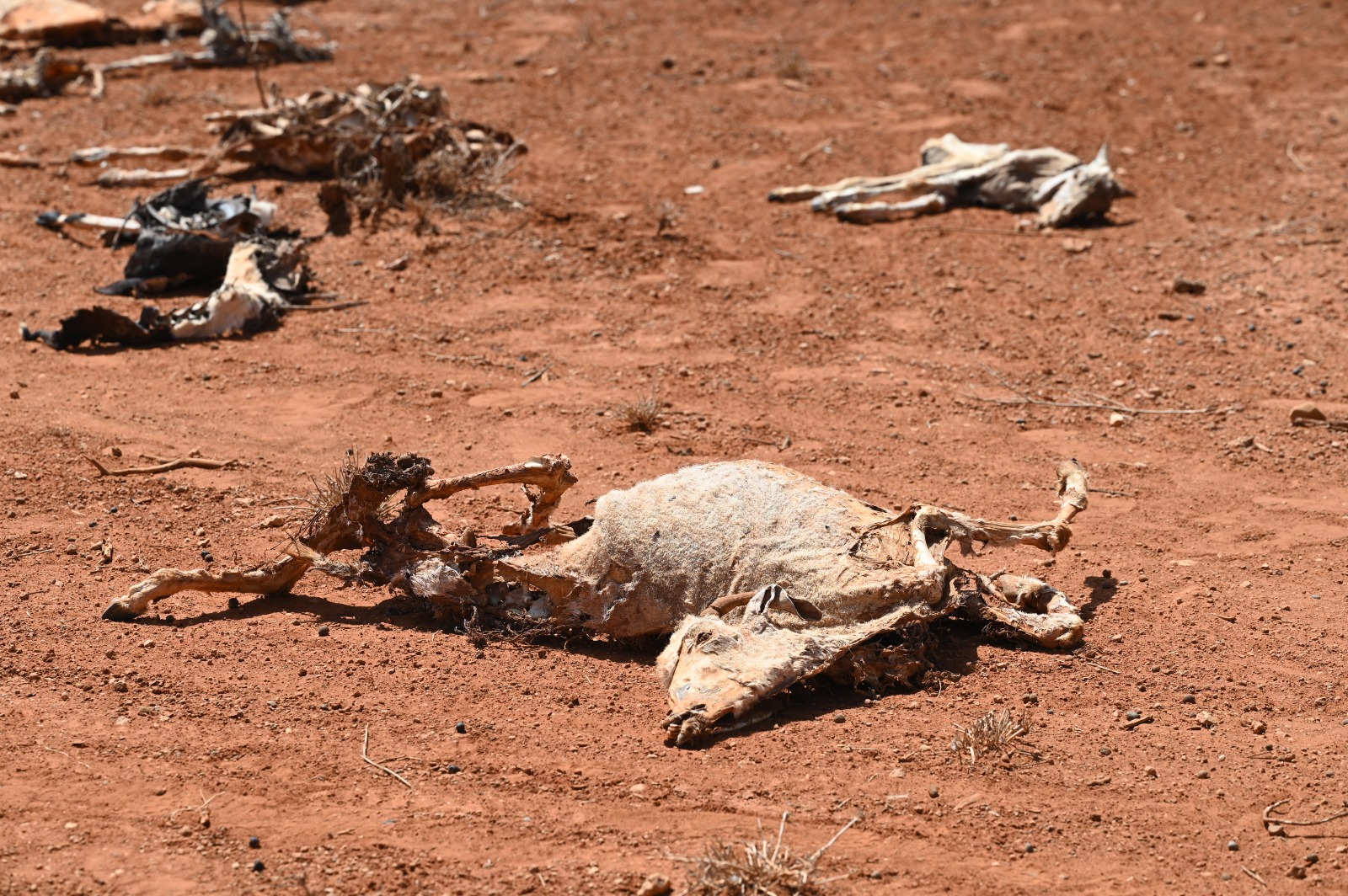
Consecutive poor rainy seasons have devastated pastoral livelihoods across counties including Wajir, Garissa, Turkana, Marsabit and Isiolo. Livestock deaths, depleted water sources and shrinking grazing lands have left pastoralist families travelling long distances in search of food and water.
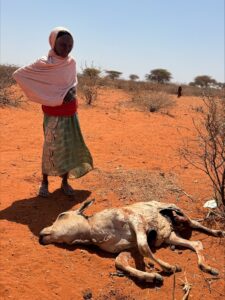
Yet the crisis is not driven by drought alone. When rains eventually arrive, they often come in destructive bursts, triggering flash floods that damage homes, infrastructure and fragile recovery efforts.
This pattern of climate extremes has turned survival into a cycle: drought erodes resilience, floods destroy what remains, and communities are forced to rebuild from increasingly weakened foundations.
Structural Vulnerabilities Persist
Humanitarian agencies have issued fresh appeals for assistance in the worst-affected areas, with aid interventions focusing on food distribution, water access, healthcare and livestock support. The Kenyan government has also allocated billions of shillings toward emergency response measures.
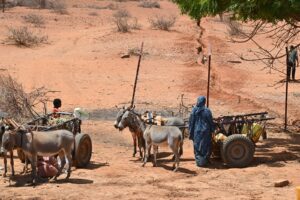
However, analysts argue that recurring appeals mask deeper systemic gaps. Limited water harvesting infrastructure, dependence on rain-fed livelihoods in arid zones, poor road networks and weak market access continue to expose communities to repeated shocks.
Despite early warning systems, national drought frameworks and decades of development funding, seasonal crises continue to escalate rather than stabilise.
Strain on Health, Education and Migration Patterns
The humanitarian impact extends beyond immediate hunger. Health facilities in affected counties report rising cases of acute malnutrition, while overstretched clinics struggle to meet growing demand.
Education systems are also under pressure, as children drop out of school when families migrate in search of pasture and water. In pastoral regions such as Turkana and Garissa, mobility linked to drought has contributed to disrupted schooling and long-term learning gaps.
For diaspora communities, the crisis resonates not only as a humanitarian concern but as a driver of migration, family separation and economic displacement, with young people increasingly leaving fragile regions in search of stability elsewhere.
Climate Change — But Not the Only Factor
Climate change is intensifying weather volatility across East Africa, increasing the frequency and severity of droughts and floods. However, experts caution that climate alone does not explain the persistence of food crises in northern Kenya.
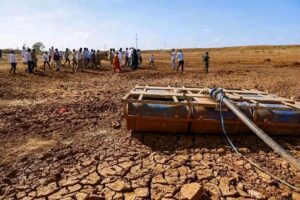
Early warning data is often available months in advance, and devolved county governments receive climate adaptation funding. Development partners have also invested heavily in resilience programmes over the past decades.
Yet implementation gaps, infrastructure deficits and limited long-term adaptation planning continue to undermine preparedness.
Breaking the Recurring Emergency Cycle
Aid remains essential in the short term, but humanitarian actors and policy analysts increasingly stress the need for structural investment.
Long-term solutions frequently cited include:
- Climate-resilient water systems such as boreholes and solar-powered pumps
- Irrigation and drought-resistant crops suited to arid regions
- All-weather roads to connect remote communities to markets and services
- Livelihood diversification beyond livestock dependence
Without these measures, experts warn, emergency food appeals risk becoming a permanent feature of the region’s response framework rather than a temporary safety net.
For millions in northern Kenya, the immediate hope is for reliable rains. But even if they arrive, the underlying question remains unresolved: whether sustained investment in resilience will finally replace the costly cycle of recurring humanitarian crises that has defined the region for decades.