By Staff Writer | 5484 Media | Nairobi, Kenya
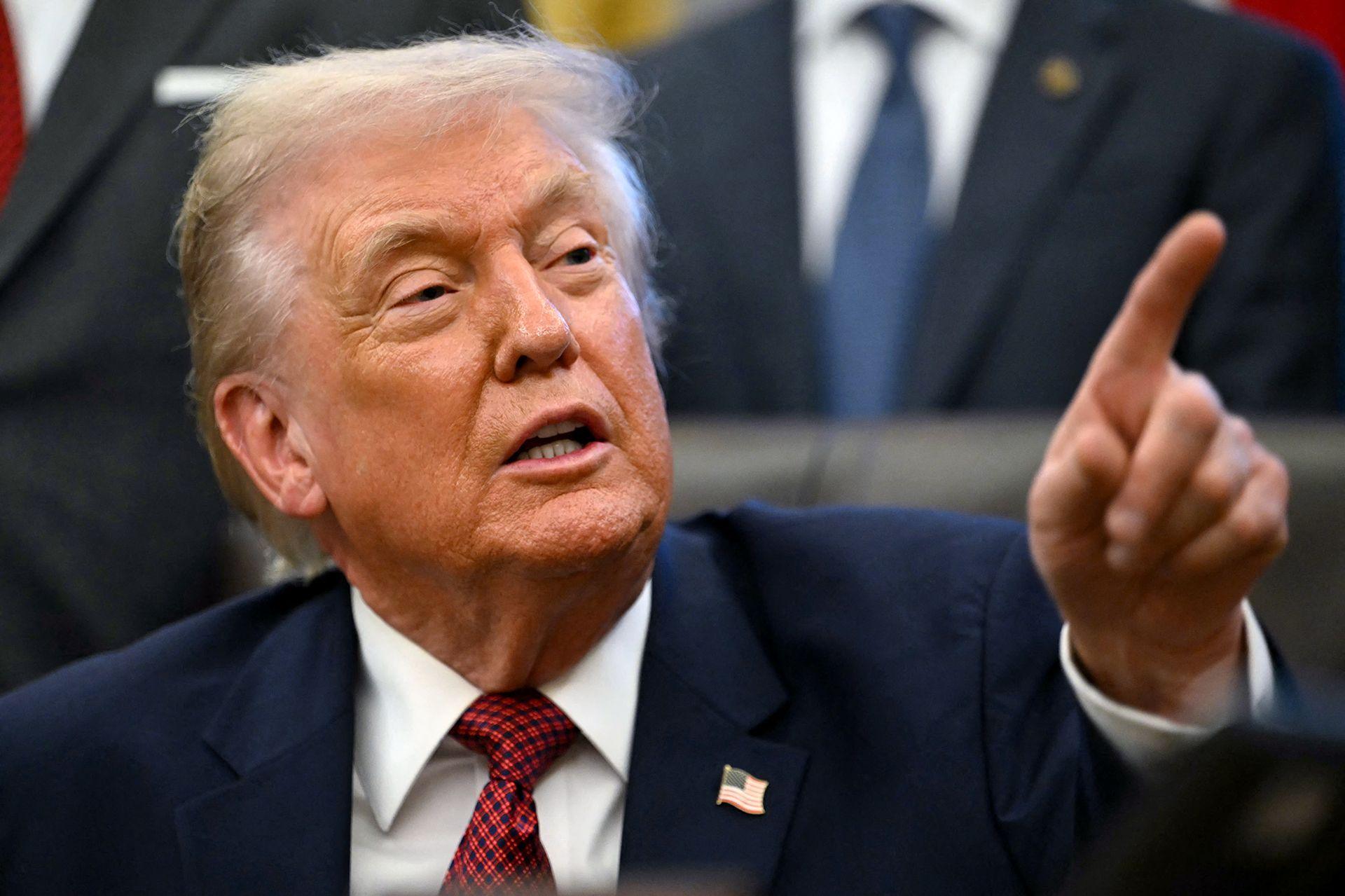
U.S. President Donald Trump has reignited transatlantic tensions with a blistering critique of Europe—calling its leaders “weak” and its nations “decaying”—while suggesting that the United States may scale back support for Ukraine as the war with Russia nears its third year.
The remarks, made in a wide-ranging interview with Politico, have sent ripples through Western capitals already navigating uncertain geopolitical terrain. To many observers, Trump’s language is not merely rhetorical provocation—it signals a potential recalibration of America’s long-standing alliances and of Washington’s central role in the war in Ukraine.
A History of Tense Transatlantic Ties
Trump’s criticism of European allies is not new. During his first presidency, he frequently accused NATO members of failing to meet defence spending commitments, at one point calling the alliance “obsolete.” He also clashed with European leaders over trade, climate policy, and migration.
But the latest attack comes at a highly sensitive moment:
- Russia’s invasion of Ukraine has reshaped global security.
- Europe is still absorbing economic shocks from inflation and energy crises.
- NATO is expanding, yet increasingly dependent on U.S. leadership.
- The U.S. itself is divided over continued military aid to Kyiv.
Against this backdrop, Trump’s assertion that European nations “talk but don’t produce” and his claim that they have “let Ukraine fight until they drop” lands with far greater force.
What Exactly Did Trump Say?
In the Politico interview, Trump argued that Europe’s political leaders lack strategic courage and are more focused on appearing “politically correct” than making hard decisions. He suggested that the U.S. could reduce its commitment to Ukraine, pushing President Volodymyr Zelensky to accept a peace deal that involves territory concessions to Russia.
He said Ukrainian negotiators “loved” the U.S.-backed proposal—but alleged that Zelensky had not even read it.
This directly contradicts statements from Kyiv, which maintains that surrendering land is non-negotiable.
How Ukraine Responded
President Zelensky, writing on X, reaffirmed that Ukraine and Europe are actively working on a revised peace plan to present to Washington. The message was diplomatic yet firm:
- Ukraine is preparing a comprehensive peace framework
- Europe is aligned with Kyiv
- Zelensky will not be pressured into territorial concession.
For Ukraine, Trump’s comments raise fears of abandonment. Kyiv has been lobbying its European and NATO allies to help prevent Washington from forcing a premature deal that could leave Ukraine vulnerable to future Russian aggression.
How Europe Reacted
European capitals have pushed back, albeit cautiously.
United Kingdom:
Downing Street dismissed Trump’s claim that Europe “failed” to act, highlighting sanctions, military support, and diplomatic engagement.
Germany:
Chancellor Friedrich Merz warned that parts of Washington’s new National Security Strategy—released shortly before Trump’s interview—were “unacceptable” from a European viewpoint, particularly suggestions of Europe’s “civilisational erasure.”
He rejected the idea that Europe required the U.S. to “save democracy,” saying Europeans were capable of safeguarding it themselves.
Russia:
Moscow, unsurprisingly, welcomed the U.S. strategy and Trump’s statements as “largely consistent” with its own worldview. The Kremlin has long hoped for a Western divide that weakens transatlantic unity.
Understanding the Political Meaning Behind Trump’s Words
Trump’s remarks can be viewed on three levels: strategic, political, and psychological.
1. Strategically
- His comments raise questions about the future of U.S. leadership in Europe. If America steps back:
- Europe may be forced to assume a larger military and diplomatic role
- NATO’s internal cohesion could be tested
- Russia may feel emboldened, believing Western resolve is wavering
2. Politically
With U.S. domestic factions increasingly divided on foreign aid, Trump’s message resonates with Americans who believe that Europe should carry more of the burden in Ukraine.
His remarks also apply pressure internally—on Zelensky, on Europe, and on Washington policymakers crafting next steps in the war.
3. Psychologically
By painting Europe as “weak,” Trump positions himself as the only leader capable of “strengthening the West” on his terms. It’s a familiar tactic from his first term: criticism as leverage.
What Does This Mean for the War in Ukraine?
Trump’s comments could influence several dynamics:
1. Peace Process Pressure
U.S. pressure on Zelensky may increase, especially if Washington pushes for a quick end to the war before deeper escalation.
2. European Autonomy
Europe may accelerate efforts to reduce dependency on American security guarantees. Some EU states already argue for “strategic sovereignty.”
3. Russian Strategy
The Kremlin could interpret Trump’s remarks as a sign that Western unity is faltering—potentially influencing its next moves.
4. Ukrainian Morale
Mixed signals from the U.S. pose risks for Ukrainian planning, diplomacy, and battlefield confidence.
Why Now?
Trump’s statements coincide with the release of a new U.S. National Security Strategy whose language raised eyebrows in European capitals. The strategy warned of Europe’s internal vulnerabilities while questioning whether all current allies can remain reliable.
Trump’s interview appears to reflect the same worldview:
a West weakened by internal division, migration shocks, and uncertain political leadership.
What Comes Next?
In the coming weeks:
- Europe will attempt to demonstrate unity
- Ukraine will present its revised peace plan to Washington
- Russia will continue to watch for signs of Western fracture
- U.S. policy toward Ukraine may come under renewed debate
What is clear is that Trump’s harsh rhetoric, whether strategic or bluntly impulsive, has already reignited fundamental questions about the future of Western alliances, the durability of NATO, and the shape of any eventual peace in Ukraine.
For now, Europe is pushing back.
Ukraine is standing firm.
And Washington is once again at the center of a geopolitical storm that will shape the fate of a continent.