By Zainab Saidi | 5484 Media, Nairobi
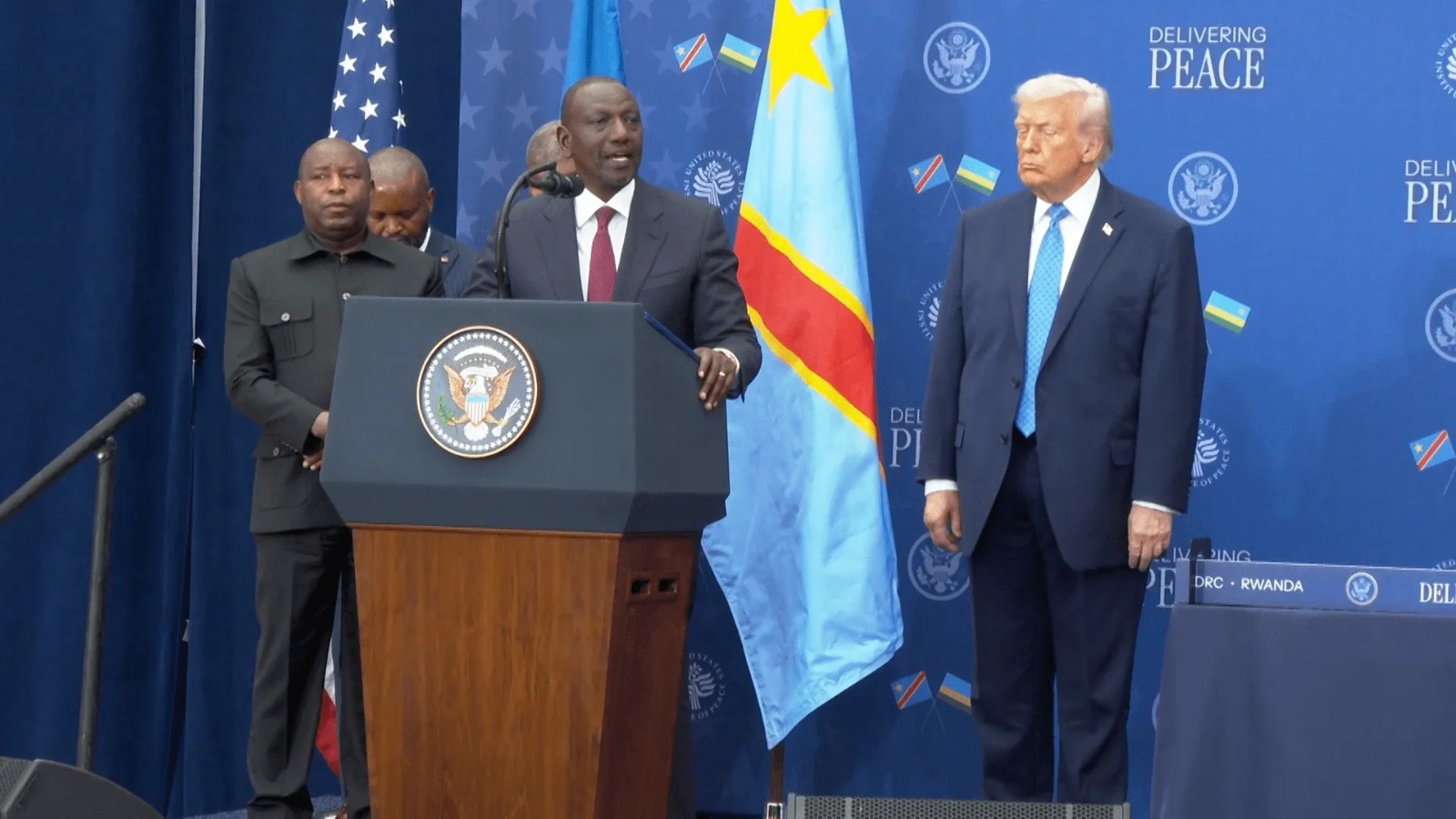
NAIROBI, KENYA — A pivotal moment in African diplomacy unfolded on December 4, 2025, in Washington as Rwandan President Paul Kagame and Democratic Republic of Congo (DRC) President Félix Tshisekedi signed a landmark peace agreement aimed at ending three decades of conflict in eastern Congo.
The ceremony, hosted by U.S. President Donald J. Trump, offered one striking image that dominated global headlines—Kenyan President William Ruto seated prominently at the center of the event, signaling Kenya’s decisive role in steering the long-awaited accord.
Ruto Hails “Monumental” Breakthrough
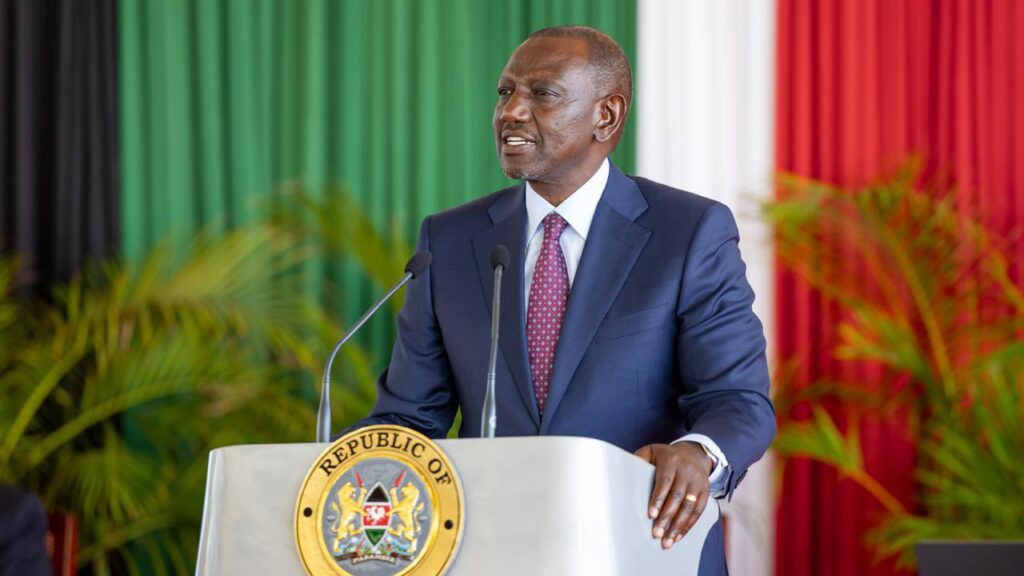
Addressing journalists shortly after witnessing the signing, President Ruto described the deal as a “monumental diplomatic milestone” and a “decisive step toward restoring lasting peace in the Great Lakes region.”
“This conflict has destroyed livelihoods, destabilized our region, and threatened the future of the Great Lakes and the African continent,” he said, emphasizing the immense human and economic toll of the prolonged war.
A Peace Deal with Direct Impact on Kenya
Beyond geopolitics, the agreement holds immediate relevance for Kenya.
According to the UNHCR Kenya Statistics Package, as of April 30, 2025, the country hosts 64,611 Congolese refugees and asylum seekers—the third-largest refugee population in Kenya.
- Over 39,000 reside in Nairobi, Mombasa, and Nakuru.
- More than 24,000 live in Kakuma and Kalobeyei.
Recurring violence in eastern Congo has repeatedly pushed new families across Kenya’s borders, stretching public services and disrupting regional trade corridors, including vital supply routes linked to the Port of Mombasa.
For these displaced communities, the peace pact represents the first credible promise of safe return in a generation.
Kenya’s Three-Year Diplomatic Marathon
While the world saw the signatures in Washington, the road to this agreement was paved through an intense three-year diplomatic effort led by Kenya—first under former President Uhuru Kenyatta and later under President Ruto.
Key components of the Kenyan strategy included:
- Secret Nairobi-hosted negotiations
- Shuttle diplomacy across regional capitals
- Leadership of the EAC-led Nairobi Peace Process
This sustained engagement provided the structural framework that ultimately enabled the final breakthrough.
Washington’s Role: Trump and Rubio Apply Pressure
Although Kenya built the diplomatic bridge, the United States reinforced it.
U.S. Secretary of State and acting National Security Advisor Marco Rubio played a key role in consolidating bipartisan support in Washington for deeper involvement in the Great Lakes peace efforts. His groundwork helped secure political momentum, while President Trump provided what observers call “decisive top-level pressure” to finalize the agreement.
Analysts say the convergence of Ruto’s steady regional diplomacy and Washington’s forceful backing created a rare alignment that made the pact possible.
Expert Reactions: Balancing African Agency and External Mediation
Reactions to the deal reveal an ongoing debate about African sovereignty in conflict resolution.
Diplomacy and Security Analyst Edgar Githua argues that strong U.S. involvement remains indispensable.
“American security guarantees, military aid, and possibly a buffer mechanism will be critical if this deal is to hold,” Githua said. He warned that DRC’s vast mineral wealth continues to attract global interests, including the United States, making enforcement complex.
In contrast, Prof. Chacha Nyaigotti-Chacha, Chairperson of the University of Nairobi Council, expressed discomfort with the reliance on foreign capitals.
“African leaders still run to foreign capitals because we do not trust one another,” he told 5484 Media. “Real African solutions demand confidence among ourselves, not ceremonies outside our soil. Today’s deal is long overdue and African-brokered in substance, but we still needed an external referee to make our presidents shake hands.”
Key Commitments in the Signed Agreement
The peace pact outlines a number of far-reaching measures, including:
- Immediate ceasefire
- Withdrawal of foreign-backed armed groups
- Joint monitoring and verification mechanisms
- Economic integration efforts championed strongly by Kenya
If fully implemented, analysts say these actions could reshape the regional stability landscape.
A Turning Point for Millions
For the 64,611 Congolese refugees in Kenya and the millions displaced inside the DRC, the agreement offers renewed hope after decades of uncertainty.
For Kenya, the accord serves as validation of years of diplomatic investment—showcasing Nairobi’s growing stature as a regional stabilizer and peace broker.
And for the Great Lakes region, the Washington signing signals a rare moment when African leadership, reinforced by international diplomacy, converged to produce a milestone capable of reshaping the future.