BY SPECIAL CORRESPONDENT | 5484 MEDIA | NAIROBI
STORY HIGHLIGHTS
- Kenya’s forest agency is holding public forums on plans to harvest mature commercial plantations—an issue sharpened by past disputes over scale, legality and transparency.
- A court ruling set strict guardrails, including a 5,000-hectare annual cap and orders for KFS to publish key documents online and demonstrate replanting and monitoring.
- The fight mirrors global tensions: balancing timber demand and jobs with climate, water and community rights—lessons seen in Canada, New Zealand, Indonesia and the EU’s new deforestation rules.
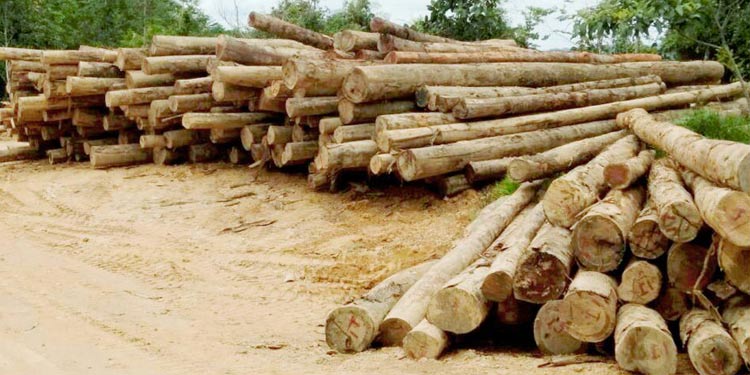
Kenya’s forest authority has brought its case for “controlled harvesting” to the public, staging consultations in Machakos town as it weighs cutting mature and over-mature plantation trees.
The Kenya Forest Service (KFS) says the exercise is part of routine plantation management—harvesting trees at the end of their rotation to avoid decay, recover value for the state, and replant new stands. The agency’s approach draws on the Forest Conservation and Management Act, which provides for the management of plantation forests and embeds public participation as a guiding principle in forest governance.
But the Machakos forums land in the middle of a wider national argument: who gets to cut, how much, under what oversight, and whether “plantation logging” can be kept separate from Kenya’s long-running battles against illegal harvesting and forest loss.
Why KFS says harvesting can be “sustainable”
KFS and industry backers argue that plantation forests—often fast-growing, even-aged stands established for timber—are designed to be harvested and replanted, much like agricultural crops. In Kenya’s case, plantation estates are often described as a small share of the gazetted forest area, and government-linked reporting has previously framed a 5,000-hectare annual disposal plan as a limited intervention compared with total plantation acreage.
The case for planned harvesting also leans on a global reality: timber demand has not disappeared. The debate is increasingly about how wood is produced—whether it comes from regulated plantations, unregulated clearing, or imports.
Globally, forests cover about 4.06 billion hectares—roughly 31% of the world’s land area—yet forest area has still been declining overall, and deforestation averaged about 10 million hectares a year between 2015 and 2020, according to the UN’s Food and Agriculture Organization (FAO).
Plantations, meanwhile, account for a small slice of global forest area—about 131 million hectares, roughly 3% of the world’s forests—but can supply a disproportionate share of industrial wood when managed intensively.
This is the tension KFS is trying to navigate: use plantation wood to relieve pressure on natural forests—while convincing Kenyans that “controlled” will not become “open season”.
The legal guardrails: courts, caps and transparency orders
Kenya’s courts have repeatedly emphasised that decisions on logging rules must meet constitutional and legal standards for public participation and environmental protection. In a major ruling in October 2024, the Environment and Land Court laid out detailed requirements for the sector.
Among the court’s directions:
- Not more than 5,000 hectares of plantations should be harvested annually, and only plantations that have reached the recommended rotation age should be cut.
- KFS should publish strategic and operational documents—including forest management plans, felling plans, public participation reports, and audits—via an online platform accessible to the public.
- The agency should demonstrate safeguards: preventing illegal logging of indigenous trees, adhering to procurement laws, and enforcing mandatory replanting and survival monitoring.
For KFS, this legal framework is both constraint and opportunity: it can point to public participation forums—like those in Machakos—as evidence it is acting within the guardrails. For critics, the same ruling is proof that trust must be earned through data, disclosure and enforcement, not assurances.
The tender controversy: fears of scale, classification and “forest grabs”
While the Machakos meetings focus on consultation, controversy elsewhere has fed suspicion.
In late 2025, timber-sector groups and community representatives publicly opposed a KFS tender inviting bids to harvest 45,000 hectares of pulpwood plantation material over an extended period in parts of western Kenya and the Rift Valley.
Opponents argued the tender’s scale risked clashing with court-imposed limits and raised concerns about who benefits, how timber is classified, and whether communities near forests lose out.
KFS tender documentation confirms the existence of the pulpwood sale process and the targeted regions, though competing interpretations remain about how such arrangements align with annual harvest caps and how “pulpwood” classification is applied.
This dispute matters for Machakos because it shapes the national mood: if people believe decisions are being made behind closed doors, local forums risk being seen as box-ticking rather than genuine participation.
Plantation forests are not “natural forests” — but impacts can still be real
One of the most misunderstood elements of the debate is the difference between plantation harvesting and clearing natural forests.
FAO data distinguishes “naturally regenerating” forests from planted forests. It estimates 93% of global forests regenerate naturally, while about 7% are planted.
Even so, plantations can still affect water, soils and biodiversity—especially if harvests are poorly timed, roads are badly built, slopes are fragile, or replanting fails. Forest disturbances such as fires and extreme weather already affect millions of hectares globally, and management plans are far less common in some regions than others—especially in parts of Africa and South America—making governance quality a key differentiator.
That is why Kenya’s court placed unusual weight on monitoring, procurement integrity, and public access to forest plans—the “plumbing” of governance that determines whether harvesting stays sustainable on paper and on the ground.
Global parallels: what Kenya can learn from elsewhere
In Canada, sustainable forest management is often framed as a mix of strong public governance and third-party certification. Canadian government guidance stresses legality and sustainability assurances, while pointing to independent certification as a key credibility mechanism for forest products.
The Forest Stewardship Council (FSC) goes further on social safeguards: its standards require upholding Indigenous Peoples’ rights, including Free, Prior and Informed Consent (FPIC) in relevant contexts.
Lesson for Kenya: credibility grows when communities can see enforceable rights frameworks and independent verification—not just internal processes.
New Zealand: plantation logging, storms and “slash” disasters
New Zealand’s plantation sector has faced a different kind of crisis: extreme weather events that wash logging debris (“slash”) into rivers and coastal areas, sparking regulatory tightening and public anger. Government pages documenting responses to land-use and woody debris risks highlight how quickly plantation forestry can become a public-safety issue when governance fails on erosion-prone land.
Lesson for Kenya: “plantation” is not a shield. Slope stability, road standards, and post-harvest clean-up can determine whether communities view forestry as economic development or environmental hazard.
Indonesia: moratoriums, maps and enforcement gaps
Indonesia made a moratorium on new permits for clearing primary forest and peatlands permanent in 2019, covering about 66 million hectares, as part of efforts to reduce emissions and fires linked to deforestation.
But civil society groups have argued that enforcement loopholes and shifting maps can undermine moratoriums even when policy looks strong.