
BY A FINANCIAL ANALYST
STORY HIGHLIGHTS
- Explosive growth: Licensed digital lenders issued 6.6 million loans worth KSh109.8bn in the first 11 months of 2025, with 195 providers approved and more than 600 awaiting licences.
- Huge demand, tighter rules: Kenyans borrow an estimated KSh13–15bn every month through mobile platforms, even as regulators clamp down on data misuse and unethical debt collection.
- Lessons for Africa’s youth: Digital credit can fuel hustles and start-ups—but only if borrowers understand costs, risks and the rules of the game.
Across Africa, young people are building livelihoods with little more than a smartphone—running online shops, driving ride-hailing cars, creating content or trading informally. Access to quick credit can make or break these ventures.
Kenya, often seen as the continent’s fintech testbed, now sits at the centre of Africa’s digital lending story. Mobile loans are no longer a fringe product. They are a mainstream financial tool—regulated, scaled and deeply embedded in everyday life.
For Africa’s youth, what is happening in Nairobi today could shape borrowing options from Lagos to Lusaka tomorrow.
The state of play in early 2026
Kenya’s Central Bank (CBK) has spent the past three years trying to bring order to a once-chaotic sector. Since the Digital Credit Providers Regulations came into force in 2022, 195 lenders have been licensed through several approval rounds in 2025 alone. More than 800 firms have applied, a sign of strong investor interest, with over 600 still under review.
The numbers tell a story of rapid expansion. Between January and November 2025, licensed digital lenders disbursed KSh109.8bn across 6.6 million loans, up sharply from mid-year figures. Industry estimates suggest Kenyans now borrow around KSh500m a day via mobile credit.
Loans range from small personal advances and school-fees top-ups to MSME working capital and asset finance, all delivered through apps or USSD menus.
Why digital credit is thriving
Speed and convenience are the obvious drivers. Instant approvals and same-minute disbursement have turned mobile loans into an everyday cash-flow tool for traders, gig workers and salaried employees alike.
There is also a structural credit gap. Millions of young Africans lack collateral or formal payslips. Digital lenders, using alternative data and mobile money histories, have stepped into a space traditional banks long avoided.
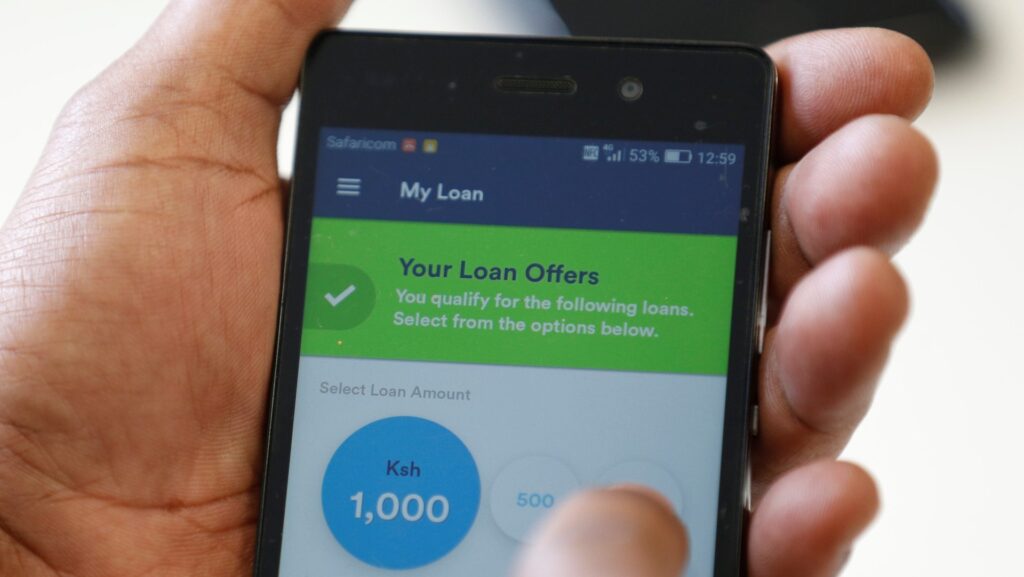
Crucially, regulation has restored confidence. After years of complaints about sky-high costs, debt-shaming and contact-harvesting, CBK licensing has imposed clearer rules on pricing disclosure, data protection and debt collection. The clean-up has stabilised the market rather than slowing it.
What the regulator says
The CBK insists tighter oversight was unavoidable. In multiple statements, it has argued that licensing protects consumers while still allowing innovation. Firms must now prove sound governance, ethical recovery practices and compliance with Kenya’s data-protection laws.
One rule has reshaped lender behaviour: borrowers cannot be listed with credit bureaus for defaults below KSh1,000. The aim is consumer protection; the side-effect has been larger minimum loan sizes and more careful credit scoring.
The central bank continues to warn the public against borrowing from unlicensed apps—and urges consumers to report offenders.
Industry voices: optimism with caution
Industry body DFSAK says digital lenders now disburse about KSh15bn a month, financing not just consumption but also smartphones and small businesses. Many firms are investing heavily in AI-driven risk models and pushing for higher capital requirements to keep rogue operators out.
Credit bureaus, however, strike a more cautious note. Non-performing loans of around 20% in parts of the digital segment highlight the risks of short-term, consumption-led borrowing—especially in a tough economic climate.
SACCO regulators have also raised red flags, warning that as cooperatives digitise, cyber-fraud risks are rising, particularly during holiday periods.
How Kenya Digital lending compares globally
Kenya is not alone.
Nigeria has rolled out tougher rules targeting abusive collections and data misuse, while regulators in Asia—from Indonesia to India—are tightening oversight of digital credit and buy-now-pay-later products.
The direction is clear: governments want innovation, but with guardrails.
Kenya’s licensing-plus-mobile-money model now closely mirrors global best practice.
Digital lending Opportunity or trap for young borrowers?
Digital loans can work—as short-term business capital—when used with discipline. Traders bridging inventory gaps, riders financing smartphones or boda bodas, and MSMEs managing seasonal cash-flow have all benefited.
But the risks are real. Small-ticket loans are the most likely to default. High interest rates can wipe out thin margins. And short tenors make digital credit unsuitable for long-gestation projects.
A simple rule of thumb applies: if your profit within the loan period cannot comfortably exceed the total cost of borrowing, do not take the loan.
For longer-term needs, SACCO loans, youth enterprise funds or blended finance options are often cheaper and safer.
Lessons for Africa’s youth
- Borrow with a plan, not pressure. Match loan tenor to real cash-flow.
- Read the true cost. Focus on total repayment, not daily rates.
- Protect your data. Licensed lenders cannot harass or scrape contacts—report violations.
- Build a credit history slowly. Timely repayment unlocks cheaper capital later.
- Diversify funding. Grants, SACCOs and supplier credit reduce reliance on expensive mobile loans.
The road ahead
Looking to 2026 and beyond, Kenya’s digital lending sector is likely to keep growing—but more cautiously. Expect steady licensing, tougher data enforcement and smarter credit models.
For young Africans, the message is balanced: digital credit is neither a silver bullet nor a scam. Used wisely, it can be a powerful tool. Used blindly, it can become a costly trap.
Kenya’s experience shows that the future of digital lending belongs not just to fast apps—but to informed borrowers.