By Staff Reporter | 5484 Media | New Delhi, India
STORY HIGHLIGHTS
- Kenya and WHO agreed to deepen collaboration in health systems, local manufacturing, and emergency preparedness.
- Regulatory reforms have attracted 13 new pharmaceutical manufacturers into Kenya’s local market.
- Kenya is targeting WHO Maturity Level 3 status by 2026 to strengthen regulatory capacity.
Kenya has reaffirmed its commitment to a stronger strategic partnership with the World Health Organization (WHO) following high-level talks held in New Delhi during the 2nd WHO Global Summit on Traditional Medicine.
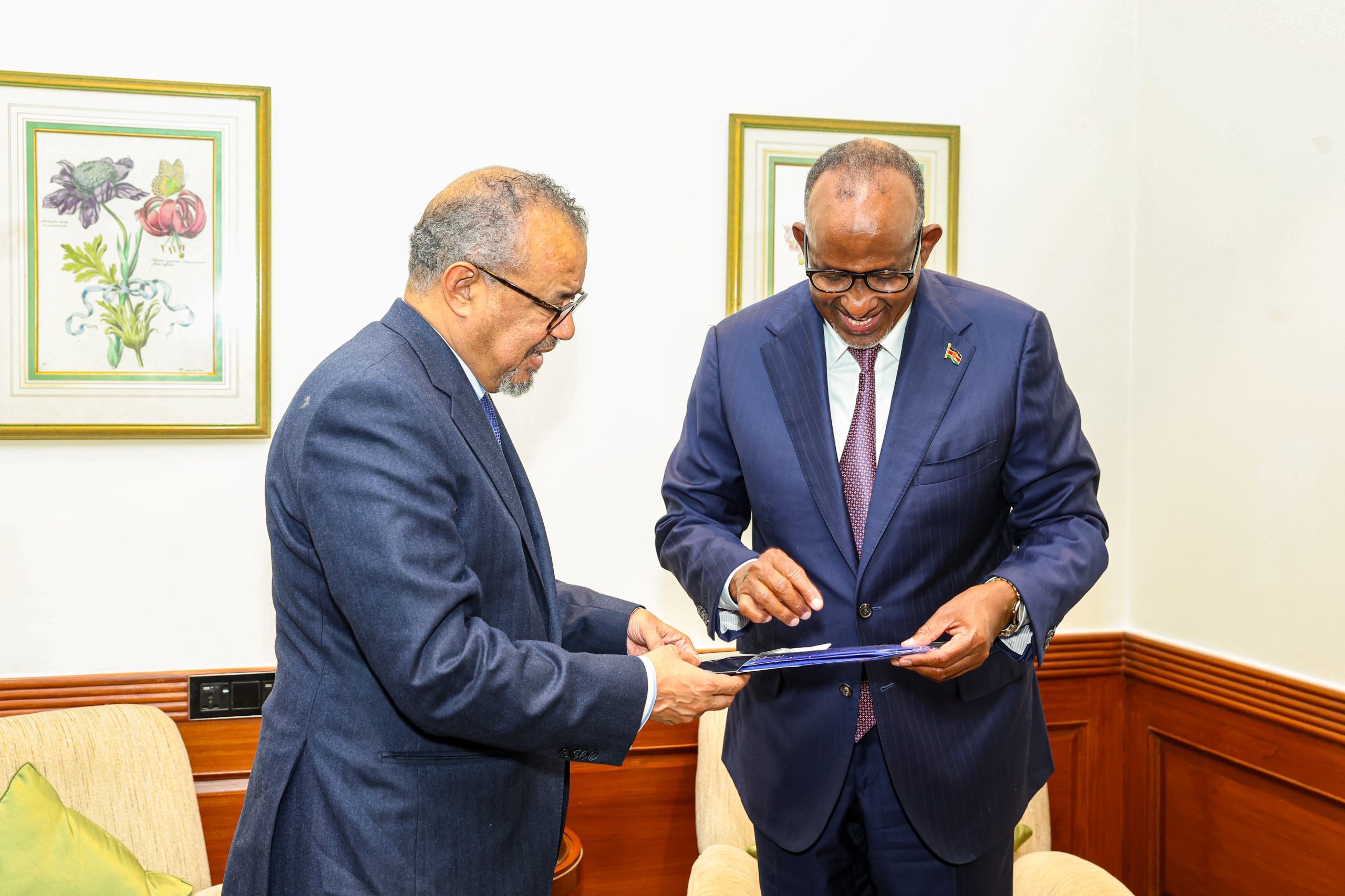
On 19 December 2025, Health Cabinet Secretary Hon. Aden Duale met with WHO Director-General Dr Tedros Adhanom Ghebreyesus to advance collaboration in health systems strengthening, local manufacturing, regulatory capacity, and emergency preparedness.
The discussions built on recent engagements between Kenya and WHO leadership, with Hon. Duale acknowledging the organisation’s sustained technical and political support to President William Ruto during early high-level consultations. He said the support has reinforced government confidence in WHO as a reliable long-term partner.
Hon. Duale emphasised Kenya’s intention to move beyond traditional aid models toward partnerships anchored in technology transfer, industrial collaboration, and sustainable systems development. He noted that this approach aligns with President Ruto’s role as the African Union Champion for Local Manufacturing, aimed at reducing import dependency and boosting Africa’s production of essential health commodities.

Kenya has already implemented key regulatory and investment reforms to support this agenda, including a fast-tracked six-month evaluation process and reduced regulatory fees for locally manufactured products. These measures have attracted 13 new pharmaceutical manufacturers, significantly strengthening local production capacity.
The Cabinet Secretary also outlined Kenya’s progress toward achieving WHO Maturity Level 3 by 2026 through ongoing Institutional Development Plans. An updated progress report is expected in January 2026, ahead of a planned WHO re-benchmarking mission from March 2026.
He called for continued WHO technical support in training and capacity building across regulatory functions for medicines and vaccines, while stressing the urgency of strengthening emergency preparedness in the face of climate change and other global health risks. Priority areas include disease surveillance, early warning systems, rapid response capabilities, and workforce readiness.
As negotiations continue on the proposed Pandemic Agreement, Kenya reiterated its commitment to working with WHO to ensure equitable outcomes that safeguard national interests while promoting global solidarity.
Hon. Duale further requested WHO’s normative and technical support in strengthening primary healthcare, advancing research, and enhancing implementation science through national institutions such as the Pharmacy and Poisons Board, Kenya Biovax Institute, National Public Health Institute, and the Kenya Medical Research Institute.
He concluded by affirming Kenya’s readiness to lead with strong political commitment and a clear implementation roadmap, expressing confidence that the partnership with WHO will deliver measurable health benefits for Kenyans.