

BY WISDOM OUMA | 5484 MEDIA | NAIROBI
STORY HIGHLIGHTS
- In the 1990s, public phone booths across rural Kenya were lifelines for students, families and long-distance relationships.
- Limited access to telephones meant queues, rehearsed conversations and shared emotional moments in public spaces.
- The rise of mobile phones and affordable data transformed communication from communal waiting to instant, private connection — a shift now echoed in diaspora nostalgia.
In the early 1990s, long before smartphones and mobile data became commonplace, communication in rural western Kenya moved at a deliberate pace. In towns and trading centres across Siaya, Kitale and Homa Bay, a single public telephone often served as the community’s communication hub.
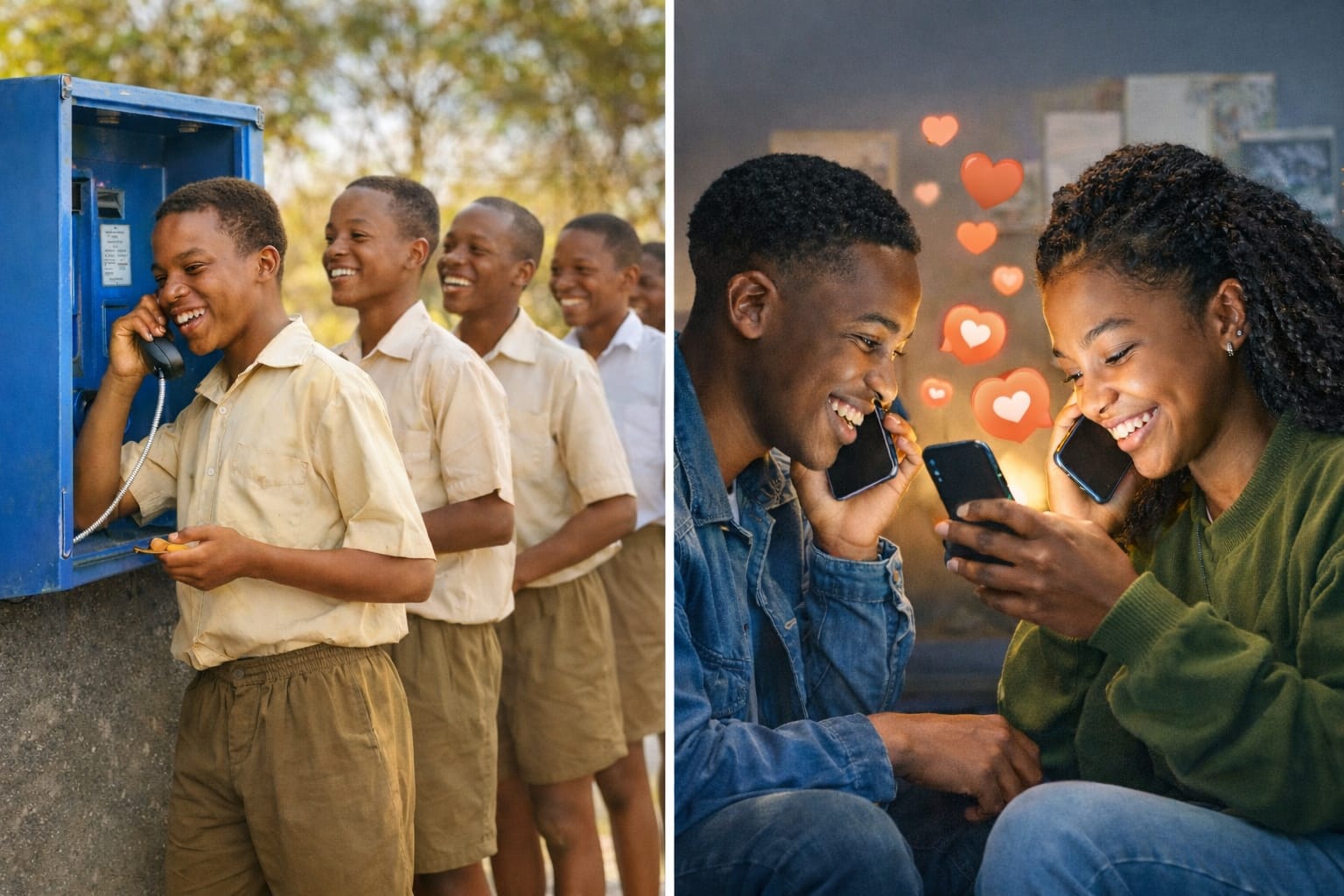
For boarding school students and local residents alike, the weekly ritual was familiar: a walk to a small shop, a queue forming outside, and coins carefully counted before making a call. Conversations were rarely spontaneous. They were planned, rehearsed and compressed into a few urgent minutes.
The public phone — often mounted in a kiosk or small retail stall — connected homes, schools and distant towns such as Nairobi and Kakamega. For many students, especially those in boarding schools, it was the only direct link to parents, guardians or loved ones.
Love, Fees and Family Duty on the Line
Calls carried emotional weight. Teenagers whispered shy greetings to sweethearts, while others dialled home to request school fees or deliver updates from term life. The queue itself became a shared social space, where laughter, anxiety and anticipation unfolded in full view of strangers.

Privacy was almost non-existent. Conversations happened within earshot of shopkeepers and fellow callers, yet this openness shaped a culture of patience and empathy. Everyone understood that each call could carry urgency — financial appeals, family news or heartfelt reassurances.
In many cases, the limited call time imposed by coin-operated systems meant difficult choices: whether to prioritise romance, responsibility or reassurance.
The Arrival of the Red Booth Era
By the mid-1990s, more modern push-button public booths began appearing in bus stops and town centres, gradually replacing older rotary phones. Though technologically improved, the social ritual remained largely unchanged.

Queues persisted, and the emotional stakes remained high. Relief after a successful call could be visible in smiles and laughter; disappointment — when lines failed or coins ran out — was equally public.
These booths symbolised progress, but also reinforced the communal nature of communication, where personal moments unfolded in shared spaces.
Wall Phones and the Transition to Mobile
The early 2000s marked a turning point. Wall-mounted public phones and prepaid calling cards became more common, offering slightly greater flexibility but still requiring physical access and time in line.

Language blended freely during calls — Kiswahili, English, Sheng and mother tongues — reflecting Kenya’s diverse social fabric. Yet even as communication became marginally easier, the culture of brevity remained: speak quickly, finish fast, and give the next person their turn.
Soon after, mobile phones began to spread rapidly across Kenya, fundamentally altering how people connected.
Echoes in a Fully Connected World
Today, communication is instant, private and mobile. Smartphones have replaced communal queues with individual screens, transforming how relationships are maintained across distances — from rural Kenya to global diaspora communities.
For many Kenyans living abroad, memories of public phone booths evoke a slower, more deliberate era of connection, where every call carried intention and emotional weight.
The shift from shared waiting spaces to pocket-sized devices reflects more than technological change. It marks a cultural transition: from collective anticipation to constant connectivity, from public conversations to private messaging.
Yet for a generation that once queued with coins in hand, the echo of those booths remains — a reminder of a time when communication required patience, and every spoken word truly mattered