
BY VICTORIA AMUNGA | 5484 Media | NAIROBI
- Potter’s pride: Elders like David Macharia turn ancestral skills into family fortunes amid government push.
- Investor bait: April 2026 conference to pitch indigenous knowledge as Kenya’s next economic frontier.
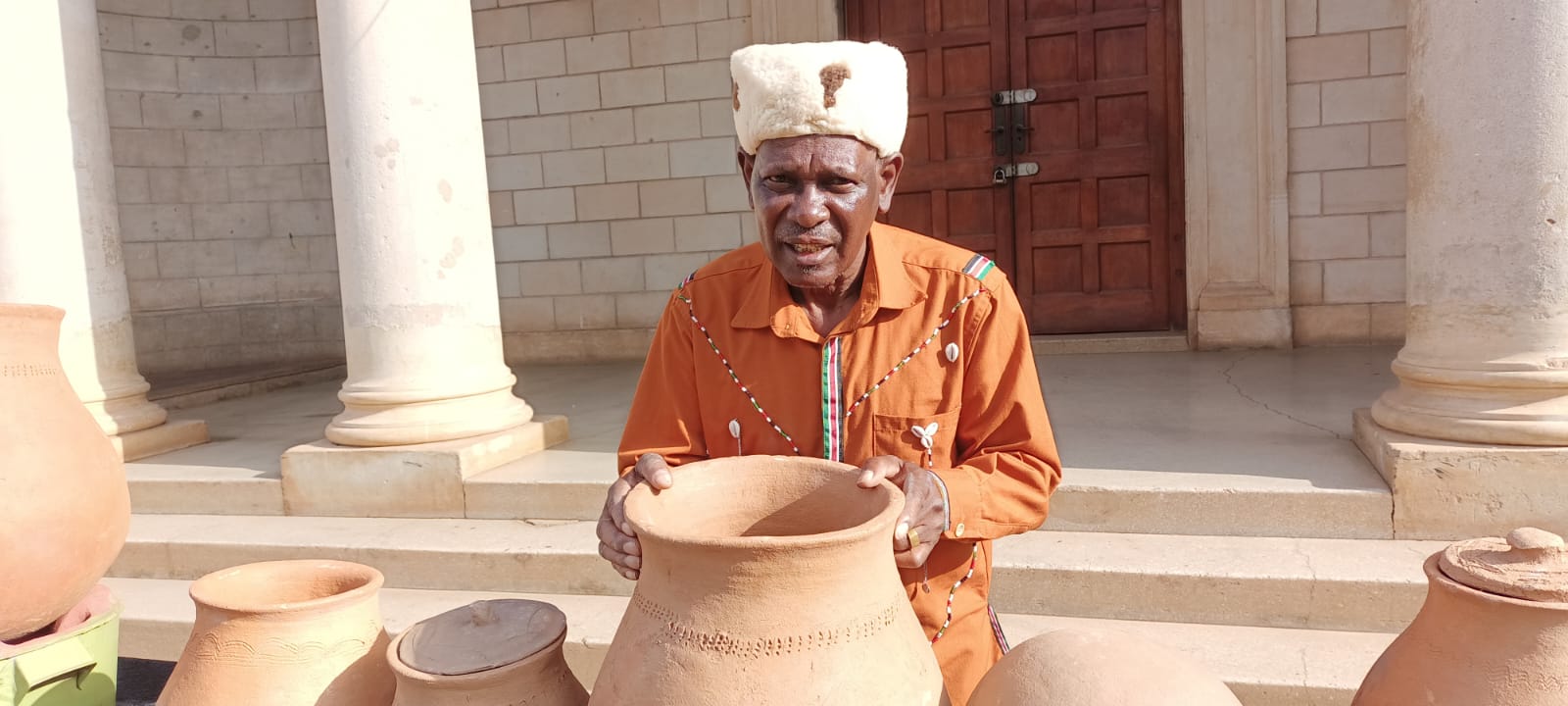
For decades, David Macharia’s hands have shaped clay into everyday essentials — cooking pots, water jars and ceremonial bowls — using skills passed down through generations.
The 62-year-old potter from Murang’a County in Kenya’s Central Highlands says the craft sustained his family long before it attracted official recognition.
“My pots paid school fees for all my seven children,” he says. “Three are now professionals.”
Macharia is no outlier. He stands at the centre of a growing national rethink, as Kenya begins to position indigenous knowledge — once dismissed as outdated — as a serious economic asset.
From Heritage to Industry
Across the country, communities skilled in pottery, weaving, herbal medicine, beekeeping and agroforestry are being recast as drivers of growth. What were long viewed as subsistence traditions are now being reframed as scalable industries aligned with global demand for sustainable, natural and culturally authentic products.
“This knowledge is not folklore,” says Dr Evance Taracha, National Coordinator of the Natural Products Industry at the National Museums of Kenya. “It is valuable intellectual property that has been protected by communities for centuries.”
For the first time, the government is systematically documenting and commercialising indigenous technologies — from Kikuyu herbal treatments to Maasai leather tanning methods that rely on natural processes rather than chemical dyes.
Economic Stakes
The creative economy — including crafts — already employs about 1.5 million Kenyans and generates an estimated Sh200 billion ($1.5 billion) annually, according to government figures. Officials believe indigenous technologies could significantly expand that contribution, particularly in rural areas where jobs are scarce and imports dominate consumer markets.
Beyond income, policymakers see the sector as a way to anchor development locally, preserve cultural identity and reduce dependence on foreign technologies.
Global Lessons
Kenya’s strategy draws on international precedents. India’s Ayurvedic medicine industry is valued at more than $18 billion a year. China has fused traditional silk weaving with advanced manufacturing for export. Brazil has built a global cosmetics industry around Amazonian botanicals.
In each case, governments moved to protect indigenous intellectual property, embed it in national policy and connect artisans to international markets.
“We are learning how to safeguard community ownership through trusts and trademarks,” Dr Taracha explains, “while linking producers to e-commerce platforms and eco-tourism markets.”
Investors Courted
That ambition will be tested in April 2026, when Nairobi hosts the country’s first International Investment Conference and Trade Fair on Indigenous Knowledge Intellectual Assets.
The event is expected to bring together investors, multinational firms and diaspora buyers, with live demonstrations ranging from Murang’a pottery kilns to Turkana basket-weaving cooperatives.
Organisers say the aim is to present indigenous knowledge not as nostalgia, but as Kenya’s next economic frontier.
A Legacy Reclaimed
For Macharia, the moment feels overdue.
“These pots are not just clay,” he says, tending a kiln under the equatorial sun. “They carry our history. Now the world is beginning to see their value.”
As global markets hunt for sustainable alternatives, Kenya’s oldest skills may yet prove to be among its most valuable resources.